Industrial Gaskets for Reliable Sealing Performance, Types, Materials and Applications
Riddhi Siddhi Metal Impex is one of the leading Stainless Steel Gaskets Manufacturers in Mumbai, India. The Stainless Steel Gaskets have been designed under the national and international industry rules using high-grade raw materials and advanced technology.
Publié 6 journées depuis dans autre, actualisé 6 journées depuis.
1. Industrial Gaskets for Reliable Sealing Performance, Types, Materials and Applications
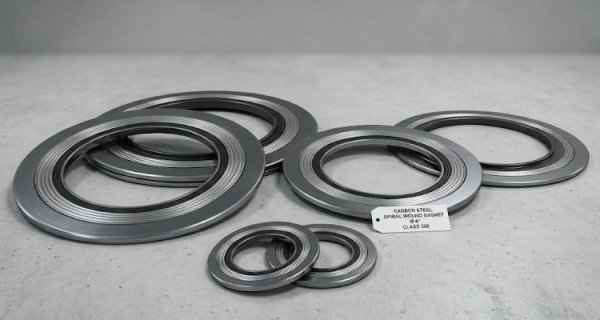
Riddhi Siddhi Metal Impex offers industrial sealing solutions designed for applications where dependable performance, dimensional accuracy and suitable material selection are essential. A Gasket is a critical sealing component installed between mating surfaces to prevent leakage of liquids, gases and process media. Depending on pressure, temperature, fluid characteristics and flange configuration, industries may require Spiral Wound Gaskets, Ring Type Joint Gaskets, Graphite Gaskets, PTFE Gaskets and other specialized designs. Understanding their construction, specifications, materials and applications helps buyers select the appropriate sealing solution for each piping or equipment requirement.
What Is a Gasket and How Does It Work?
A gasket is a compressible or metallic sealing element installed between two mating surfaces, commonly flanges, to fill surface irregularities and create a leak-resistant joint. When the connected components are tightened, the gasket forms a seal that helps contain the operating medium.
Different industries require different gasket designs because pressure, temperature, chemical exposure and mechanical loading can vary considerably. Common options including spiral Wooden Sund Gaskets, Ring Type Joint Gaskets, Metal Jacketed Gaskets, Graphite Gaskets, PTFE Gaskets, Rubber Gaskets and Non-Asbestos Gaskets.
Spiral Wound Gasket vs Ring Type Joint Gasket
Although both are widely used for industrial sealing, Spiral Wound and Ring Type Joint designs differ in construction, sealing mechanism, flange compatibility and typical service conditions.
Feature
Spiral Wound Gasket
Ring Type Joint Gasket
Construction
Alternating metal winding and filler material
Solid metallic ring
Sealing Method
Compression of winding and filler
Metal-to-metal sealing
Typical Flange
Raised Face, Flat Face and selected applications
RTJ flanges
Pressure Service
Low to high pressure depending on design
High and very high pressure
Temperature Service
Wide range depending on materials
Suitable for demanding temperature conditions
Flexibility
Can accommodate certain flange irregularities
Requires precise flange and groove dimensions
Installation
Relatively straightforward
Requires accurate alignment
Common Industries
Chemical, petrochemical, power and process industries
Oil & gas, petrochemical and high-pressure systems
Which Gasket Should You Choose?
Spiral Wound Gaskets are commonly considered where compressibility and resistance to changing operating conditions are important. Ring Type Joint Gaskets are designed for applications requiring precise metal-to-metal sealing, particularly in high-pressure piping.
The final selection should always be based on the piping specification, flange standard, pressure rating, temperature and service medium.
Gasket Specifications to Check Before Ordering
The required Gasket Specifications depend on the equipment and operating environment. Buyers should verify:
Specification
What to Consider
Size
Nominal pipe size and flange dimensions
Pressure Rating
Operating and design pressure
Temperature
Minimum and maximum service temperature
Material
Metal, filler and facing material
Thickness
Required compression and flange arrangement
Flange Type
RF, FF or RTJ configuration
Standard
ASME, API, EN, DIN or project specification
Media
Water, steam, oil, gas, chemicals or other fluids
Gasket Material and Its Importance
Gasket material directly affects chemical resistance, temperature capability and sealing performance. Common materials include graphite, PTFE, stainless steel, carbon steel, flexible graphite, mica, aramid fibre and specialized alloys.
For Spiral Wound Gaskets, the winding metal and filler can be selected according to service conditions. Ring Type Joint Gaskets are manufactured from metallic materials such as stainless steel, carbon steel and nickel alloys depending on pressure, temperature and chemical requirements.
Gasket Application and Uses
The gasket application and uses vary according to the operating environment and equipment requirements.
Oil & Gas: Pipelines, refineries, pressure vessels and process equipment
Chemical Processing: Reactors, pumps, valves and corrosive-fluid lines
Petrochemical: Heat exchangers and high-pressure process piping
Power Generation: Steam, condensate and utility systems
Pharmaceutical: Process equipment and controlled fluid systems
Food Processing: Equipment requiring suitable hygienic sealing solutions
Water Treatment: Pumps, pipelines and treatment equipment
Marine: Piping systems exposed to demanding operating environments
How to Choose the Right Gasket?
Selecting a suitable gasket involves more than matching the pipe size. Buyers should consider pressure, temperature, fluid, flange facing, flange standard, bolt loading, gasket dimensions and expected service conditions.
For example, a high-pressure oil and gas line may require a metallic Ring Type Joint, whereas a chemical-processing application may require a Spiral Wound design with a compatible filler and winding material.
Choosing a Gasket Supplier in India
When purchasing industrial sealing products, buyers should evaluate material traceability, dimensional accuracy, manufacturing standards, inspection procedures and documentation. A dependable Gasket Supplier in India should also be capable of providing different gasket types, materials and dimensions according to project requirements.
For industrial procurement, customized dimensions, technical assistance, documentation and delivery capability can become important factors when gaskets are required for critical piping or equipment.
Why Choose an Experienced Gasket Manufacturer?
An experienced Gasket Manufacturer in India can support buyers with appropriate material, dimensions and construction based on operating conditions. This is particularly relevant for specialized gaskets used in high-pressure, high-temperature or chemically aggressive environments.
Consistent manufacturing and inspection practices can also help maintain dimensional accuracy and product consistency, supporting proper installation and sealing performance.
Frequently Asked Questions
What is the main purpose of a gasket?
A gasket creates a seal between two mating surfaces and helps prevent leakage of fluids or gases from a connected system.
What is the difference between Spiral Wound and Ring Type Joint Gaskets?
Spiral Wound Gaskets combine metal winding with filler material, whereas Ring Type Joint Gaskets are solid metallic rings designed to seal inside specially machined RTJ flange grooves.
Which gasket is suitable for high-pressure applications?
Ring Type Joint Gaskets are commonly used in high-pressure and critical piping applications. Properly designed Spiral Wound Gaskets can also be used for high-pressure service depending on their construction and specifications.
Conclusion
Gaskets may be relatively small components, but they play an important role in maintaining leak-resistant connections throughout industrial piping and equipment. Spiral Wound and Ring Type Joint Gaskets offer different sealing characteristics, making correct selection essential for specific pressure, temperature and process conditions.
By evaluating material, dimensions, flange compatibility, operating conditions and applicable standards before procurement, industries can select a sealing solution suited to their requirements. Riddhi Siddhi Metal Impex provides industrial gasket solutions for buyers seeking dependable products for diverse piping and process applications.
Votre réaction?


Plus de nouvelles
Plus de listes