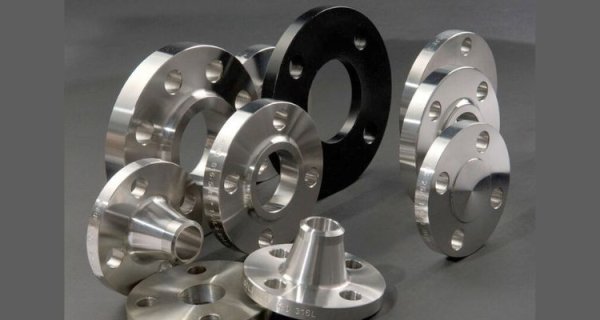
Carbon Steel Flanges for Industrial Piping Buyer Guide to Grades F42 to F56
Pipex.ai enables industrial buyers to evaluate and source critical piping components with clarity and confidence, which is especially important when selecting carbon steel flanges for industrial piping systems.
Gönderildi 7 ay önce içinde diğer, güncellenmiş 7 ay önce.

1. Carbon Steel Flanges for Industrial Piping Buyer Guide to Grades F42 to F56
Pipex.ai enables industrial buyers to evaluate and source critical piping components with clarity and confidence, which is especially important when selecting carbon steel flanges for industrial piping systems. Carbon steel flanges play a vital role in ensuring the integrity, safety, and efficiency of pipelines used across oil and gas, power generation, petrochemical processing, water treatment, and heavy infrastructure projects. From a buyer’s perspective, understanding material grades is essential to making cost-effective and technically sound procurement decisions.
Why Carbon Steel Flanges Are Preferred in Industrial Piping
Carbon steel flanges are widely used because they offer a strong balance between mechanical performance, availability, and overall lifecycle value. Buyers favor these flanges for their high load-bearing capacity, good weldability, and ability to perform reliably under pressure and temperature variations. Compared to alloy or stainless steel alternatives, carbon steel flanges are generally more economical, making them suitable for large-scale projects where volume procurement is required.
For industrial buyers, another key advantage is standardization. Carbon steel flanges are manufactured in accordance with widely accepted international standards, allowing compatibility across systems and simplifying sourcing, inspection, and maintenance.
Importance of Grade Selection from a Buyer Perspective
Not all carbon steel flanges perform the same. Grades such as F42, F46, F48, F52, and F56 are defined by their mechanical strength, particularly yield and tensile properties. Selecting the right grade helps buyers align material performance with operating conditions, ensuring safety while avoiding unnecessary overspending on over-specified materials.
Understanding these grades allows procurement teams to optimize budgets, meet regulatory requirements, and reduce the risk of premature failures.
Carbon steel F42 flanges are typically chosen for applications with moderate pressure and stress requirements. Buyers often specify this grade for water pipelines, low-pressure oil and gas lines, and general industrial piping. F42 flanges offer reliable performance, ease of fabrication, and good availability in the global market.
From a purchasing standpoint, F42 flanges are attractive due to their lower cost and suitability for non-critical service lines where extreme mechanical strength is not required.
Carbon steel F46 flanges provide higher strength than F42, making them suitable for systems operating under increased pressure or mechanical load. Buyers usually consider F46 flanges for refinery piping, chemical plants, and industrial process systems where improved safety margins are necessary.
This grade offers a practical balance between performance and cost, which is why it is commonly specified in mid-range industrial applications.
Carbon steel F48 flanges are selected when buyers require enhanced tensile strength and improved resistance to deformation. These flanges are commonly used in energy infrastructure, process piping, and transmission lines where operating conditions are more demanding.
For buyers focused on long-term value, F48 flanges provide durability and reduced maintenance risk, contributing to lower total cost of ownership over the life of the project.
Carbon steel F52 flanges are widely used in critical oil and gas applications, including high-pressure transmission pipelines and offshore installations. Buyers prioritize this grade for its high yield strength and ability to maintain structural integrity under extreme operating conditions.
From a procurement perspective, F52 flanges are often specified to meet stringent industry codes and safety standards, making them a preferred choice for mission-critical systems.
Carbon steel F56 flanges represent a higher strength category designed for heavy-duty industrial use. Buyers select this grade for applications involving high internal pressure, significant mechanical stress, or harsh operating environments.
Although F56 flanges may involve higher initial procurement costs, buyers recognize their value in reducing operational risk, minimizing downtime, and extending the service life of complex piping networks.
Applications Across Industrial Sectors
Carbon steel flanges across grades F42 to F56 are used in a wide range of industries. Oil and gas buyers rely on them for upstream, midstream, and downstream operations. Power plants use them in steam, boiler, and cooling systems. Chemical and petrochemical facilities depend on their compatibility with various process fluids. Infrastructure and water projects value their strength and cost efficiency.
This versatility allows buyers to standardize materials across projects while adjusting grades based on specific service conditions.
Standards Compliance and Quality Expectations
Industrial buyers consistently look for flanges manufactured to recognized standards such as ASTM and ASME. Compliance ensures dimensional accuracy, predictable mechanical performance, and compatibility with other piping components. Documentation, material test certificates, and traceability are also critical factors influencing buying decisions.
Choosing the correct grade along with proper certification helps buyers meet regulatory requirements and avoid costly project delays.
Long-Term Value for Buyers
Experienced buyers evaluate carbon steel flanges based on total lifecycle cost rather than upfront price alone. Durability, maintenance requirements, ease of installation, and long-term reliability all influence purchasing decisions. Selecting the right grade ensures optimal performance without unnecessary material overspending.
Grades F42 through F56 offer buyers flexibility to match material strength precisely to application needs, supporting both technical performance and financial efficiency.
Conclusion
From a buyer’s perspective, carbon steel flanges remain a cornerstone of industrial piping systems due to their proven strength, versatility, and cost-effectiveness. Understanding the differences between carbon steel F42, F46, F48, F52, and F56 flanges enables informed procurement decisions that align with operational demands and long-term project goals. By selecting the appropriate grade, industrial buyers can achieve safety, compliance, and sustainable value across diverse piping applications.
Tepkiniz?


Daha fazla haber

Diğer listeler